Shopify inventory management in 2026: where native ends
Shopify has become the most accessible e-commerce platform in the world, but its native inventory management features hit a ceiling fast. As soon as you cross a few thousand SKUs, open a second sales channel (Amazon, TikTok Shop, a European marketplace), or move to a 3PL to scale fulfillment, the Shopify app alone can't keep up. The result: stockouts, overstock, inventory discrepancies, and a customer support team buried under "Where Is My Order" tickets.
This comparison breaks down the seven most relevant solutions for Shopify merchants in 2026. Whether you're a scaling DTC brand, an omnichannel operator, or a Shopify Plus store running multiple warehouses, you'll find the right tool for your stage of growth.
Why You Need a Dedicated Inventory Management Software for Shopify
Shopify handles single-channel, single-warehouse, basic inventory just fine. Three specific moments push merchants toward a dedicated solution.
Going multichannel. Selling on Shopify plus Amazon plus TikTok Shop without real-time inventory sync inevitably leads to overselling. Shopify's native sync is limited to its own channels and official apps.
Adding a second warehouse or a 3PL. Shopify can display inventory by location, but logistics arbitration (which warehouse ships which order, based on stock and distance to the customer) requires a more advanced OMS or IMS.
Operational complexity. Demand forecasting, supplier purchasing, batch management, kits and bundles, omnichannel returns: all features that are missing or only superficially handled in native Shopify.
Our Selection Criteria for Shopify
For a Shopify merchant, the criteria differ from a generic IMS. We scored each solution on:
- Depth of Shopify integration: official native connector, real-time sync, Shopify Plus support, app store ecosystem.
- Multichannel coverage: Amazon, eBay, European marketplaces, TikTok Shop, physical retail.
- 3PL and multi-warehouse capability: ability to connect external logistics providers or multiple internal warehouses without friction.
- Automation: replenishment rules, allocation, shipping, demand forecasting.
- ROI and scalability: ability to grow with the merchant, from early-stage DTC to international Shopify Plus.
Top 7 Best Inventory Management Software for Shopify
1. Spacefill
Spacefill is the go-to platform for Shopify merchants moving beyond the "one site, one warehouse" model and into multi-3PL or multi-warehouse setups. It combines an OMS with a logistics collaboration platform: your Shopify store connects to Spacefill, which then orchestrates orders to the right logistics node without replacing your providers' WMS.
Best for: Shopify and Shopify Plus merchants outsourcing to one or more 3PLs, omnichannel brands using ship-from-store, European multi-country retailers.
Key features:
- Multichannel Order Management System connected to Shopify and marketplaces.
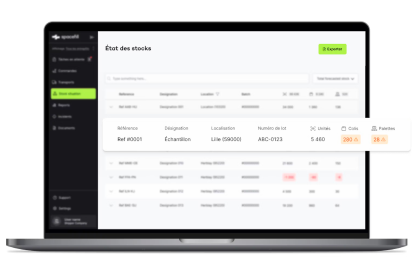
- Real-time inventory aggregated across all warehouses and 3PLs.
- 3PL collaboration platform (shared visibility for providers and carriers).
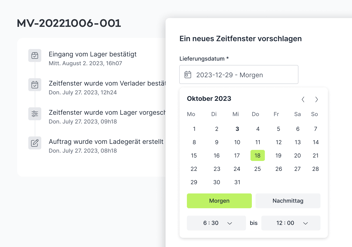
- Dynamic delivery promise based on stock and capacity.
- Smart Order AI: automated extraction of B2B orders from PDFs or EDI.
- 3PL Connect: native connectors to providers' WMS, no migration required.
Shopify integrations: native connector via 3PL Connect, deployed in a few weeks.
Pricing: on request (book a demo).
Strengths: the only solution that truly orchestrates Shopify plus 3PL plus retail without replacing existing systems. Over 500 deployments across France and Germany, with references like Ravensburger, Stryker, and Coca-Cola.
Limitations: most relevant once you have 2+ warehouses or 1+ 3PL. For a single-warehouse Shopify merchant just getting started, Stocky or Trunk will be a better fit.
2. Stocky (Shopify native)
Built by Shopify and included with Shopify Plus, Stocky is the official solution for demand forecasting, supplier purchasing, and cycle counts.
Best for: single-warehouse Shopify Plus merchants, or those running a few physical stores connected via Shopify POS.
Key features: demand forecasting based on Shopify history, supplier purchase orders, receiving and physical inventory counts, replenishment recommendations, cost tracking.
Integrations: native Shopify, Shopify POS, suppliers via purchase orders.
Pricing: included with Shopify Plus, or around 39 USD per month standalone.
Strengths: seamless Shopify integration, fast onboarding, free for Shopify Plus merchants.
Limitations: doesn't handle multichannel beyond Shopify, not built to orchestrate an external 3PL, basic forecasting compared to Cin7 or Brightpearl.
3. Cin7 Core
A multichannel IMS suite popular among DTC brands graduating from spreadsheets. Cin7 Core covers inventory, purchasing, light manufacturing, and selling across all channels.
Best for: mid-market DTC brands, B2B distributors with a Shopify storefront, brands selling on Shopify plus Amazon plus eBay.
Key features: multi-warehouse inventory, supplier purchasing and receiving, BOM and light assembly, demand forecasting, e-commerce and marketplace connectors.
Integrations: Shopify (official), WooCommerce, Amazon, eBay, ShipStation, QuickBooks, Xero.
Pricing: starts around 349 USD per month.
Strengths: solid multichannel coverage, rich integration ecosystem, scalable up to mid-market.
Limitations: steep learning curve, dated UI, no native capability to orchestrate multiple 3PLs.
4. Trunk
A lightweight app focused on real-time multichannel inventory sync. Trunk plugs into Shopify and pushes inventory updates to Amazon, eBay, Etsy, Walmart, Square, and more.
Best for: multichannel Shopify merchants whose top priority is preventing overselling and automating bundles or kits.
Key features: real-time sync across 12+ channels, bundle, kit, and multipack management, threshold alerts, multi-user support, fast setup.
Integrations: Shopify, Amazon, eBay, Etsy, Walmart, Square, Faire, Squarespace.
Pricing: starts around 35 USD per month.
Strengths: affordable price, setup in a few hours, single-purpose tool (inventory sync) that's well executed.
Limitations: not a full IMS (no purchasing, no forecasting, no advanced multi-warehouse). Best paired with other tools as you grow.
5. SkuVault Core
An IMS built for warehouse operations with deep Shopify integration. SkuVault Core brings warehouse-grade rigor to Shopify inventory: locations, picking, packing, optimized shipping.
Best for: Shopify brands with an in-house warehouse, e-commerce operations looking to professionalize picking and packing without rolling out a heavyweight WMS.
Key features: location management (rack, bay, bin), optimized multi-order picking, packing with QC, real-time Shopify sync, detailed operational reporting.
Integrations: Shopify, Amazon, eBay, ShipStation, QuickBooks.
Pricing: starts around 449 USD per month.
Strengths: deep warehouse functionality, picking automation, active retail e-commerce community.
Limitations: less relevant if you outsource to a 3PL, longer learning curve than Cin7.
6. Sumtracker
A simple, well-rated app on the Shopify App Store, designed for merchants who need multi-location inventory and bundles without ERP-level complexity.
Best for: Shopify Plus merchants with a few warehouses or physical stores, brands selling bundles or kits.
Key features: multi-location inventory (Shopify locations, marketplaces), bundle and kit management, supplier purchasing, marketplace sync, basic reporting.
Integrations: Shopify (native app store), Amazon, eBay, Etsy.
Pricing: starts around 39 USD per month.
Strengths: fast onboarding, affordable, ideal for single or multi-location Shopify Plus stores.
Limitations: not built for very high volumes or multi-3PL operations. Better suited to brands keeping logistics in-house.
7. Brightpearl by Sage
An omnichannel retail platform that combines inventory, OMS, CRM, and reporting. Very popular with UK and European DTC brands scaling into physical retail.
Best for: Shopify retail brands opening physical stores, operators running Shopify POS across a chain of locations.
Key features: unified inventory and OMS, POS and retail sync, workflow automation (allocation, replenishment, shipping), multi-channel reporting, omnichannel returns.
Integrations: Shopify (official), BigCommerce, Magento, Amazon, eBay, Cdiscount.
Pricing: on request (mid-market focus).
Strengths: powerful omnichannel coverage, sophisticated automation, dedicated support.
Limitations: opaque pricing, less suited to single-channel pure-play e-commerce.
Comparison Table
| Software | Target Profile | Indicative Pricing | Shopify Differentiator |
|---|---|---|---|
| Spacefill | Multi-3PL and omnichannel brands | On request | Orchestrates Shopify plus 3PL plus retail |
| Stocky | Single-warehouse Shopify Plus | Included with Plus / 39 USD/mo | Native Shopify, forecasting and purchasing |
| Cin7 Core | Mid-market multichannel DTC | From 349 USD/mo | Broad multichannel and BOM |
| Trunk | Multichannel merchants | From 35 USD/mo | Real-time multi-marketplace sync |
| SkuVault Core | Brands with in-house warehouse | From 449 USD/mo | Warehouse-grade picking and packing |
| Sumtracker | Multi-location Shopify Plus | From 39 USD/mo | Bundles and Shopify locations |
| Brightpearl | Mid-market omnichannel retail | On request | Retail POS and automation |
How to Choose Based on Your Shopify Profile
You're Just Starting Out on Shopify
Stick with the native features, or add Trunk (multichannel sync) or Sumtracker (multi-location). These tools cover 95% of your needs up to the first tens of thousands of dollars in monthly revenue.
You're Scaling Multichannel (Shopify plus Amazon plus Marketplaces)
Cin7 Core and Trunk are the two most-used options. Pick Cin7 if you need depth (purchasing, BOM, forecasting). Pick Trunk if you only want inventory sync without the complexity of a full IMS.
You're Adding Multiple Warehouses or a 3PL
This is where Shopify-native apps run out of steam. Spacefill becomes relevant the moment you orchestrate two warehouses or one external provider. SkuVault Core makes sense if you stay in-house and need to industrialize a single warehouse.
You're Opening Physical Retail
Go with Brightpearl for full omnichannel, or Stocky plus Shopify POS if you want to stay inside the Shopify ecosystem. Spacefill can sit on top of Brightpearl or Stocky to orchestrate between stores and 3PLs.
Conclusion
For a Shopify merchant, the right inventory management software depends on where you are in your scaling curve. Stocky and Trunk cover the early years. Cin7 and Sumtracker support multichannel growth. SkuVault industrializes the in-house warehouse. Brightpearl runs omnichannel retail. And Spacefill comes into play as soon as multi-3PL or multi-country logistics complexity takes over, which is happening earlier and earlier in the lifecycle of an ambitious DTC brand.
Already running multiple warehouses or an external 3PL, and finding coordination has become a bottleneck for your Shopify store? Book a Spacefill demo to see how to unify Shopify, your 3PLs, and your carriers on a single platform.
FAQ
Is Stocky enough for my Shopify store?
Stocky works well for demand forecasting and supplier purchasing on a single Shopify warehouse. It falls short the moment you sell on Amazon or eBay (it doesn't handle multichannel sync outside Shopify), the moment you work with an external 3PL, or if you need complex bundle management or multi-warehouse coordination.
How do I connect my 3PL to Shopify?
Three options. First, your 3PL has a native Shopify integration through its WMS (rare, and often limited). Second, you go through an integration middleware (ShipStation, ShipBob, Shippo). Third, you adopt a logistics orchestration platform like Spacefill, which plugs into both Shopify and your provider's WMS, syncing in real time without forcing a migration.
Is Shopify Plus enough to manage multiple warehouses?
Shopify Plus lets you define multiple locations and display stock by location. But logistics arbitration (which order goes to which warehouse based on stock, distance, daily capacity) is still manual or very limited. For real orchestration, you need a dedicated OMS like Spacefill, or an OMS module inside Brightpearl.
What are the best Shopify apps for managing returns?
Returns are a separate function. Loop Returns and Returnly lead the pack on customer experience. On the inventory side, your IMS is what re-integrates the SKU into available stock. Brightpearl and Spacefill handle omnichannel reintegration natively; Stocky and Cin7 do too, provided your workflows are configured properly.
Is there a free solution for Shopify?
Stocky is free with Shopify Plus. Sumtracker offers a limited free plan. Beyond that, the full-featured solutions (Cin7, SkuVault, Spacefill, Brightpearl) are paid, with pricing reflecting their functional depth.
When should I move from a Shopify app to an orchestration platform?
The typical threshold is the arrival of a second warehouse, an external 3PL, or a third significant sales channel. At that point, the cost of a Shopify-native app effectively becomes the cost of manually managing discrepancies (stockouts, overselling, missed promises). A platform like Spacefill pays for itself the moment you cross that line.