Inventory management in 2026: from stock counting to fulfillment orchestration
Inventory management in 2026 is no longer about counting SKUs in a single warehouse. The most successful retailers now combine inventory and fulfillment orchestration: real-time visibility across multiple warehouses, coordination of third-party logistics providers (3PLs), dynamic delivery promises based on stock and carrier capacity, and omnichannel returns. This convergence is redefining what makes a "good" inventory management platform.
Our Top 10 reflects that shift. It blends next-generation hybrid platforms (which cover inventory, OMS, and 3PL collaboration in a single interface) with more traditional specialized IMS tools that still make sense for certain company profiles. Below, you'll find a breakdown of each solution: its strengths, limitations, indicative pricing, and the type of business it fits best.
Why Inventory Management Software Has Become Essential in 2026
Three trends make a dedicated platform almost mandatory once a company gets past a few hundred SKUs or operates across multiple sales channels.
1. Pressure on the customer promise. B2C buyers expect 48 to 72-hour delivery, easy returns, and full visibility. Without reliable stock data synced across channels (online store, marketplaces, brick-and-mortar locations, 3PLs), keeping that promise becomes impossible.
2. Logistics fragmentation. A mid-market retailer typically operates several warehouses, sometimes outsourced to different 3PL partners. Coordinating these partners without a central platform means manually managing drift, stockouts, and inventory discrepancies.
3. The hidden cost of dead stock. Industry research shows that stockouts and overstock can eat between 5% and 15% of an e-commerce business's revenue on average. Software that anticipates needs (replenishment, forecasting, alerts) pays for itself quickly.
How We Selected Our Top 10
We used five criteria to evaluate each solution:
- Core features: real-time tracking, multi-warehouse, alerts, forecasting, lot and serial number management.
- Integrations: ERP, e-commerce (Shopify, WooCommerce, PrestaShop, Magento), marketplaces, carriers, 3PL WMS systems.
- Scalability: ability to support a company from SMB to mid-market, all the way to international group.
- Pricing: transparency, model (per user, per volume, per site), accessibility for SMBs.
- Support and deployment: time to go live, onboarding, community, and partner ecosystem.
This ranking isn't an absolute leaderboard. It's a framework to help you identify the solution that matches your context. Read the typical-fit profile for each tool before building your shortlist.
Top 10 Best Inventory Management Software
1. Spacefill
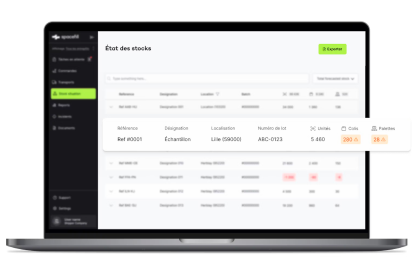
Spacefill is a hybrid platform that combines inventory management, OMS (Order Management System), and 3PL collaboration in a single interface. It deploys without replacing your logistics partners' existing WMS, which makes it a uniquely positioned choice for retailers and manufacturers orchestrating multiple warehouses or multiple logistics partners.
Best for: omnichannel retailers, mid-market and enterprise e-commerce brands, multi-brand manufacturers, B2B distributors with franchisees or resellers.
Key features:
- Centralized Order Management System: orchestrates orders across channels and warehouses.
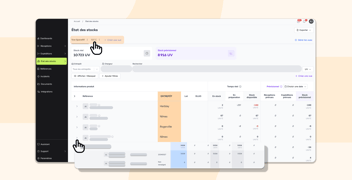
- Real-time Inventory Management across the full logistics network.
- 3PL collaboration platform (control tower): unified tracking of providers and carriers.
- 3PL Connect: native connectors for ERP, CMS, WMS, and Zendesk.
- SpaceDock: dock booking portal and collaborative scheduling.
- Smart Order AI: automated invoice reading and order ingestion.
Integrations: ERP (generic), e-commerce CMS, 3PL WMS systems, Zendesk. API documented at developer.spacefill.com.
Pricing: custom quote (book a demo).
Strengths: deployment in a few weeks (vs. several months for a traditional OMS), no need to replace the existing WMS, shared visibility with your 3PLs, built for multi-provider ecosystems. More than 500 deployments across France and Germany, with references including Ravensburger, Stryker, Coca-Cola, Eurofins, and MBE.
Limitations: positioned for mid-market and enterprise; very small single-channel e-commerce stores may find the functional depth oversized.
2. Cin7 Core
A multichannel IMS suite built for growing DTC brands and B2B distributors. Cin7 Core (formerly DEAR) covers inventory, purchasing, light manufacturing, and sales.
Best for: mid-market e-commerce brands, multichannel distributors, DTC brands scaling beyond spreadsheets.
Key features:
- Multi-warehouse inventory tracking.
- Basic demand forecasting.
- Purchase order and receiving management.
- Light manufacturing (BOM, assembly).
- E-commerce and marketplace connectors.
Integrations: Shopify, WooCommerce, Amazon, eBay, Xero, QuickBooks, ShipStation.
Pricing: starting around 349 USD per month.
Strengths: broad functional coverage, reasonable learning curve, solid e-commerce integration ecosystem.
Limitations: interface feels dated to some users, support quality varies by plan tier.
3. NetSuite Inventory Management
The inventory module of Oracle's NetSuite cloud ERP. It's the go-to choice for mid-market and enterprise groups that want a single source of truth across finance, inventory, and supply chain.
Best for: multi-country mid-market companies, international groups, and businesses already on NetSuite or looking for a unified ERP.
Key features:
- Multi-warehouse, multi-currency, multi-subsidiary.
- Lot, serial number, and expiration date management.
- Advanced demand planning and forecasting.
- Built-in financial reporting.
- Configurable workflows.
Integrations: the entire NetSuite ecosystem (CRM, financials, SuiteCommerce e-commerce), plus partner connectors.
Pricing: custom quote (typically tens of thousands of dollars per year, plus implementation).
Strengths: functional depth, international scalability, financial governance.
Limitations: high cost, lengthy deployment projects (several months), not a fit for SMBs.
4. Zoho Inventory
An affordable all-in-one solution for SMBs, tightly integrated with the Zoho suite. A solid choice for early-stage e-commerce or moderate-growth businesses.
Best for: small businesses, early-stage DTC brands, companies already using Zoho.
Key features:
- Multi-warehouse inventory tracking.
- Purchase orders and invoicing.
- E-commerce and marketplace connectors.
- Shipment tracking.
- Mobile app.
Integrations: Shopify, Amazon, eBay, Etsy, Zoho Books, Zoho CRM.
Pricing: limited free plan; paid plans start around 29 USD per month.
Strengths: excellent value, fast time to value, native fit inside the Zoho ecosystem.
Limitations: caps on monthly order volumes, less depth for mid-market needs, dependence on the Zoho ecosystem to unlock the full value.
5. Brightpearl by Sage
An omnichannel retail platform combining inventory, OMS, CRM, and reporting. Designed for mid-market retail brands with both physical store and e-commerce presence.
Best for: omnichannel retail brands, retailers with brick-and-mortar plus e-commerce, DTC brands opening retail locations.
Key features:
- Unified inventory and OMS.
- Workflow automation (allocation, replenishment, shipping).
- Built-in POS.
- Cross-channel reporting.
- Returns management.
Integrations: Shopify, BigCommerce, Magento, Amazon, eBay, carriers, accounting tools.
Pricing: custom quote (mid-market focused).
Strengths: powerful automations, 360-degree retail view, dedicated support.
Limitations: limited pricing transparency, retailer-oriented (less relevant for pure-play B2B).
6. Linnworks
A UK-based multichannel inventory and shipping platform built for e-commerce sellers. Particularly strong on marketplace management.
Best for: European multichannel sellers, marketplace-driven operators (Amazon, eBay, Cdiscount), high-volume order shippers.
Key features:
- Real-time multichannel sync.
- Shipping management and label printing.
- Marketplace listing automation.
- Multi-warehouse.
- Performance reporting.
Integrations: 100+ marketplace and e-commerce connectors, European carriers.
Pricing: starting around 300 GBP per month.
Strengths: unmatched marketplace coverage, shipping automation, active European user community.
Limitations: technical interface, steeper learning curve, less suited to single-channel DTC brands.
7. Katana Manufacturing ERP
A cloud MRP built specifically for SMB manufacturers. Covers inventory and production management linked to sales.
Best for: brands that manufacture (cosmetics, food and beverage, furniture, artisan fashion), make-to-order shops, batch production.
Key features:
- Raw material and finished goods tracking.
- Production planning.
- Bill of materials (BOM) management.
- Sales-to-production sync.
- Production cost tracking.
Integrations: Shopify, WooCommerce, QuickBooks, Xero, ShipStation.
Pricing: starting around 179 USD per month.
Strengths: built for makers, intuitive visual interface, solid e-commerce integrations.
Limitations: not designed for pure retailers or distributors without manufacturing, limited logistics features.
8. Fishbowl Inventory
An inventory and manufacturing solution for QuickBooks users. Available cloud or on-premise, which appeals to companies that want to keep their data in-house.
Best for: North American SMBs on QuickBooks, manufacturers, businesses that prefer on-premise deployment.
Key features:
- Multi-warehouse inventory.
- Manufacturing (BOM, work orders).
- Purchasing and receiving.
- Barcode and scan support.
- Operational reporting.
Integrations: QuickBooks (native), Xero, Shopify, Amazon, carriers.
Pricing: starting around 329 USD per month (cloud); perpetual licenses available.
Strengths: native QuickBooks integration, flexible licensing model, manufacturing depth.
Limitations: aging interface, mostly North American support and ecosystem, not built for omnichannel retail.
9. Sortly
A visual, mobile-first app for inventory and asset tracking. Strongly oriented toward small businesses and field teams (job sites, workshops, archive rooms).
Best for: small businesses, tradespeople, workshops, asset management (equipment, tools), small e-commerce stores with limited SKUs.
Key features:
- Visual catalog with photos.
- Barcode and QR scanning via mobile.
- Threshold alerts.
- Multi-user access.
- Custom fields.
Integrations: Zapier, CSV exports, API.
Pricing: limited free plan; paid plans start around 24 USD per month.
Strengths: instant onboarding, mobile-first design, accessible pricing.
Limitations: not suited for high-volume or multichannel e-commerce, no built-in e-commerce features.
10. inFlow Inventory
An inventory and small-business B2B solution focused on purchase orders, quotes, and invoicing.
Best for: small B2B businesses (distribution, wholesale, trading), small companies that want a simple tool without going full ERP.
Key features:
- Multi-warehouse inventory.
- Quotes, purchase orders, invoices.
- B2B customer portal.
- Mobile app.
- Basic reporting.
Integrations: Shopify, WooCommerce, Amazon, QuickBooks, Xero, Zapier.
Pricing: starting around 89 USD per month.
Strengths: simplicity, built-in B2B features, accessible pricing.
Limitations: less suited for omnichannel retail, narrower integration ecosystem.
Side-by-Side Comparison Table
| Software | Primary target | Indicative pricing | Standout strength |
|---|---|---|---|
| Spacefill | Mid-market and enterprise multi-3PL | Custom quote | Inventory plus 3PL orchestration in one platform |
| Cin7 Core | Mid-market e-commerce and B2B | From 349 USD/month | Broad multichannel coverage |
| NetSuite | Mid-market and international groups | Custom quote (high) | Unified ERP for finance and inventory |
| Zoho Inventory | Small businesses | From 29 USD/month | Best value for money |
| Brightpearl | Mid-market omnichannel retail | Custom quote | Retail automation |
| Linnworks | Multichannel and marketplace sellers | From 300 GBP/month | Marketplace coverage |
| Katana | SMB manufacturing | From 179 USD/month | Visual MRP for makers |
| Fishbowl | QuickBooks SMBs and manufacturers | From 329 USD/month | QuickBooks integration and on-premise option |
| Sortly | Small businesses and asset tracking | From 24 USD/month | Mobile-first and visual |
| inFlow | Small B2B businesses | From 89 USD/month | Simplicity and B2B focus |
How to Choose Your Software Based on Your Profile
Case 1: You manage multiple warehouses or 3PL providers
If your logistics setup is distributed (a main warehouse plus regional 3PLs, ship-from-store, different partners by country), a classic IMS isn't enough. You need an orchestration layer that sees stock everywhere, routes the order to the right node, and collaborates with your providers' WMS systems instead of replacing them.
Recommended solution: Spacefill. That's exactly the scenario it was built for, with fast time to live and no rip-and-replace on the 3PL side.
Case 2: You're a growing DTC e-commerce brand
You have a few thousand SKUs, two or three sales channels (Shopify, Amazon, maybe TikTok Shop), and a single warehouse or a 3PL. You want a tool that saves time on purchasing, forecasting, and multichannel sync.
Recommended solutions: Cin7 Core, Linnworks (if you're heavily marketplace-driven), or Zoho Inventory (if you're early-stage and price-sensitive).
Case 3: You manufacture your own products
If you handle production (raw materials, BOMs, work orders), pick a tool designed for manufacturing from day one.
Recommended solutions: Katana (cloud, e-commerce friendly), Fishbowl (QuickBooks, on-premise option).
Case 4: You're a small business or workshop
For a low SKU count, simple operations, and a tight budget, prioritize ease of use and mobility.
Recommended solutions: Sortly (mobile-first), inFlow (B2B), Zoho Inventory (free plan).
Conclusion
The "best" solution doesn't exist in absolute terms. It depends on your customer base, the complexity of your logistics, and your operational maturity. For mid-market retailers and manufacturers running multiple warehouses or multiple logistics providers, the convergence of inventory plus fulfillment orchestration is the decisive criterion in 2026, and Spacefill is today the most mature platform on that front.
Managing multiple warehouses or multiple 3PLs, with coordination becoming a bottleneck? Book a Spacefill demo to see how to unify inventory, orders, and logistics collaboration in a single platform.
FAQ
What's the average price of inventory management software?
For an SMB, cloud solutions start around 30 to 100 USD per month per user. For a mid-market business, budgets typically land between 500 and 5,000 USD per month, depending on functional depth. For an enterprise group (NetSuite, Spacefill enterprise tier), expect tens of thousands of dollars per year, with implementation projects of several months for ERPs and a few weeks for next-generation platforms.
Are there free inventory management software options?
Yes, several solutions offer a limited free plan, notably Zoho Inventory and Sortly. These plans work well for small businesses with few SKUs and orders. Beyond that, upgrading to a paid plan quickly becomes necessary.
Do I need a WMS, an IMS, or an OMS?
The WMS (Warehouse Management System) handles physical operations inside a warehouse (putaway, picking, packing). The IMS (Inventory Management System) tracks stock levels and syncs them across channels. The OMS (Order Management System) orchestrates orders and routes them to the right warehouse. A platform like Spacefill combines IMS and OMS, and collaborates with your providers' existing WMS without replacing them.
How do I integrate inventory software with my ERP?
Most modern solutions ship with native connectors to common ERPs (NetSuite, Sage, SAP, Microsoft Dynamics) or documented REST APIs. Before choosing, check the maturity of the connector for your specific ERP and the level of integration effort required (days rather than months).
How long does deployment take?
For an SMB tool like Zoho or Sortly, expect a few days to two weeks. For a mid-market IMS like Cin7 or Brightpearl, expect one to three months. For a NetSuite-class ERP, expect six to twelve months. For a next-generation platform like Spacefill, expect a few weeks; the goal is to deploy quickly without replacing your existing logistics systems.
What should I choose if I outsource logistics?
If you work with one or more 3PLs, choose a platform that natively collaborates with their systems instead of trying to replace them. That's exactly Spacefill's positioning: it plugs into your providers' WMS, gives you unified visibility, and orchestrates orders without forcing a migration on the 3PL side.